





Faculty of Economics Department of International Economics
International society is changing day by day
Producing human resources who can lead

Faculty of Economics Department of International Economics
International society is changing day by day
Producing human resources who can lead


Informatization and internationalization progress
Unraveling economic and social issues
Acquire the ability to lead to solutions
Students learn about the world economy by paying attention to the movement of money not only domestically but also overseas, and acquire a global perspective. We will develop a sense of balance that allows you to act in accordance with the flow of money, and the ability to lead in an increasingly integrated and fluidized international society.

01
Small group exercises (seminar)
Full of basic learning

The basic seminars that students take from the first semester of their first year are filled with basic learning such as how to write notes, reports, and papers necessary for university life.
02
The key to studying economics
Subjects related to “life”

Before learning specialized subjects, build the basics of economics through introductory subjects related to "life." Increase your desire to learn while feeling familiar with economics.
03
Looking ahead to your career path after graduation
Strengthen career education

"Career education-related subjects" allow students to engage in practical learning such as corporate research and internships that will help them become more aware of who they will be after graduation.
04
Learn economics from multiple angles
Establishment of a wide range of specialized subjects
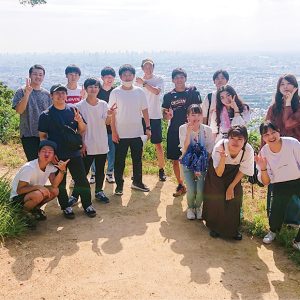
Economics is deeply related to daily life. In order to cover this wide range of fields, we have established a variety of specialized subjects related to daily life and the local community.



Four courses and programs available from the first year
From the first year, students are divided into four courses and programs: Economics Course, Advanced Career Course, Civil Service Course, and Tourism Business Course. They explore the topics they want to study and their future career paths and goals based on their interests and aptitudes.

Economics Course
From the basics to applications, students can freely study a wide range of fields according to their interests and goals, and through in-depth research through seminars and other activities, they can maximize their individual learning.
We will support you in obtaining qualifications that will allow you to utilize your economic knowledge and help you develop your career.

Advanced career course
By taking the Economics Proficiency Test (ERE) and TOEIC, students aim to achieve higher levels of employment and career paths, such as Osaka Sangyo University Graduate School, reputable private companies, or public service positions at prefectural offices.
We provide full support to students who work hard, with guidance backed by a proven track record in academics and employment.


Civil Service Course
You can study through a unique curriculum aimed at passing civil service exams (police, fire department, etc.).
The courses taken are recognized as graduation credits, eliminating the need to attend two schools.

Tourism Business Course
Students will learn about policy and other topics across the board, and develop practical skills that will enable them to respond to a variety of business situations.
In addition to honing a global perspective, we will cultivate human resources who can contribute to society through tourism.

Athlete Support Program
For students who were involved in sports club activities in high school and would like to continue in club activities after entering university, we aim to develop human resources who can thrive in a variety of industries, such as distribution and finance, by acquiring economic knowledge and basic social skills.

?Ms. Masuzu Ishikawa
MARIN ISHIKAWA
Activities of the University Festival Executive Committee
For future sustenance
In my first and second years, I took classes in a wide range of fields including economics, and am currently working on the SDGs and food loss issues. In addition to my studies, I am also Human Resources Department of the University Festival Executive Committee, which I have been involved with since my first year. I am conscious of building a team in which everyone takes the initiative in tackling their own work by adding my own individuality to the way I have been working as Human Resources Department. I feel that I have gained a lot of experience that will be useful even after I enter the workforce, such as giving explanations to participating groups, coordinating schedules, and managing security shifts on the day.

Risa Ito
RISA ITO
While learning about SDGs
I want to improve my problem-solving skills
In the seminar, we are learning about companies' efforts towards SDGs. Our group's theme is food loss, so our problem-solving skills are improved as we propose various solutions. I became interested in the SDGs after participating in food bank activities in my high school student council, so it's really fun to study a topic that interests me at university.
Since seminars are held in small groups starting from the first year, students can hone their communication skills through presentations and exchanging opinions.
1st year
Learning how to learn
Learn introductory economics
Small group exercises (seminar) also started
2nd year
Basic skills development
While continuing basic learning
Explore your interests and aptitudes
3rd year
Applied skill development
While learning more about your specialized field,
Develop economic and social analytical skills
4th year
graduation research
The theme of the paper
There are a wide range of career options after graduation!
1st year
| Exercise subjects | Basic exercises 1 and 2 |
|---|---|
| Introductory economics subjects | Life and Economy / Life and Money / Life and Law / Introduction to Macroeconomics / Introduction to Microeconomics / Japanese Economic Theory 1 / Asian Economic Theory / Public Finance 1 / Finance Theory / Financial Planning / Economic Geography / Social Economics A / Economics History/Social history/Bookkeeping/Accounting etc. |
| practical subjects | Business etiquette/Career course A (career design)/Overview of foreign history, etc. |
2nd year
| Exercise subjects | Basic Exercise 3/Specialized Exercise 1 |
|---|---|
| Economics basic subjects | Macroeconomics / Microeconomics / Japanese Economic Theory 2 / Economic Policy / International Economics / Japanese Economic History / Economic Statistics / Social Economics B / Social Security Theory / Public Finance 2 / Social Policy / History of Social Thought / History of Economics A/Regional economic theory/World economic theory/Western economic history/Tourism theory/Tourism economic theory/Data analysis theory 1 and 2/Economic mathematics, etc. |
| practical subjects | Intercultural Communication Theory / Legal Subjects (Civil Law / Commercial Law / Economic Law / Administrative Law / Labor Law) / Business Practice / Business English Exercises / Economic English Exercises / Business Chinese Exercises / Economic Chinese Exercises / Overseas Training A, B, C /Field Study A/B/Introduction to Japanese History, etc. |
3rd year
| Exercise subjects | Specialized exercises 2 and 3 | |
|---|---|---|
| practical subjects | Legal Subjects (International Law) / Business Japanese Exercises / Practical Japanese Writing Exercises / Introduction to Oriental History / Introduction to Geography / Topography / Introduction to Physical Geography / Introduction to Ethics, etc. | |
| Department of International Economics Applied Subjects | Comparative social theory / International human rights theory / International relations theory / Tourism policy theory / Regional finance theory / East Asian economic theory / Development economic theory / International cooperation theory / European economic theory / Southeast Asian economic theory / Chinese economic theory / American economic theory / Trade Theory/International Finance Theory/Cultural Studies Special Lecture on International Economics A/Special Lecture on International Economics B, etc. | |
4th year
| Exercise subjects | Specialized Seminar 4/5/Graduation Thesis |
|---|
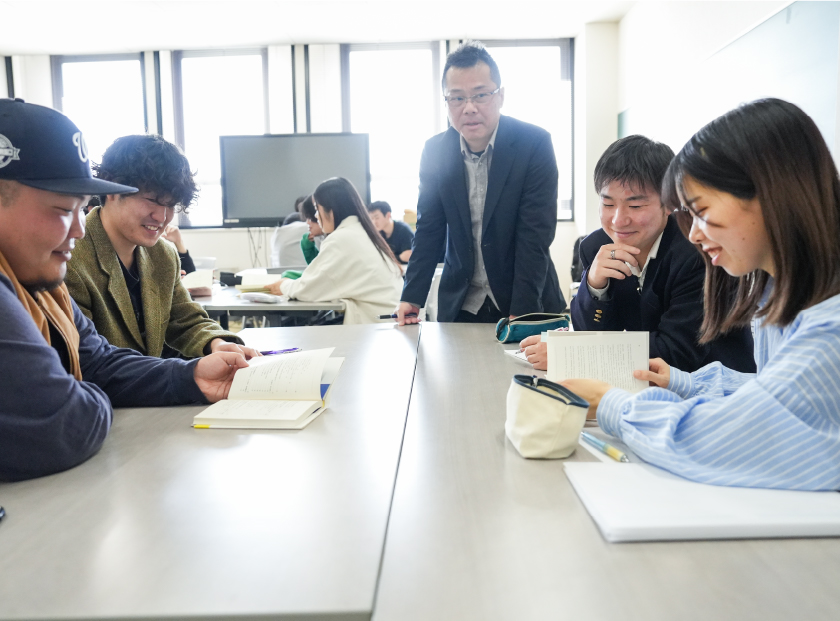
Kimura seminar
In our social and economic lives, we sometimes face challenges such as old age, disability, illness, and unemployment. Social security is a system in which society as a whole supports individuals and families facing challenges and guarantees a minimum standard of living for all. The final system within social security is "social welfare." Social welfare serves as an "anchor" within social security. In this seminar, we will hold various discussions on the theme of social welfare. Specifically, members will first take turns reading basic literature, then organize and share the content. After that, each member will set a theme based on their individual interests, and will exchange opinions while repeatedly reading literature and making presentations. Ultimately, students will write a graduation thesis based on what they have learned.
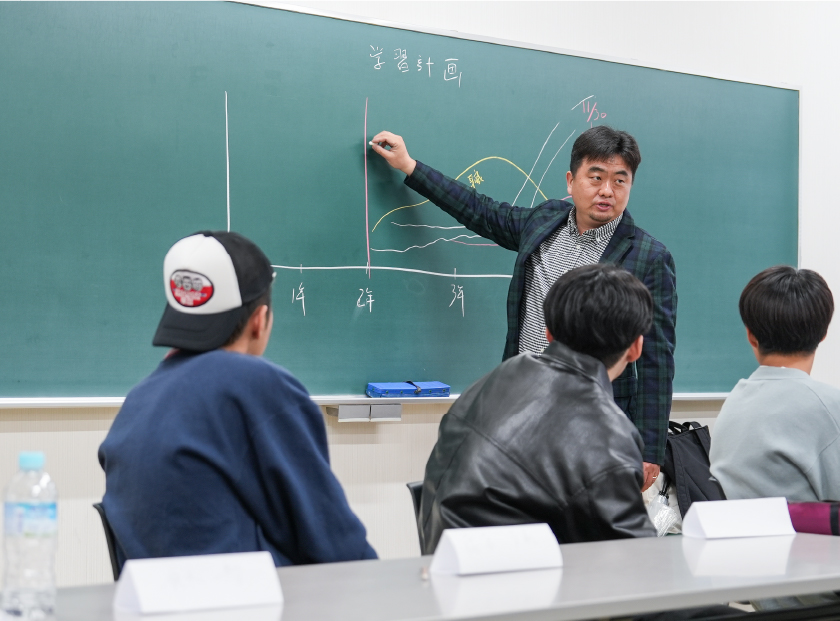
Lee seminar
This seminar is based on the new employee training program of the corporate planning department of a major company. Specifically, we work on assignments like a project and engage in team activities with multiple members. By experiencing the working atmosphere in a real working environment, we value the idea of ``Let's try it!'' and create a sense of excitement. In addition, when setting assignments, we incorporate a number of tools that are perfect for participatory classes, such as economics simulations and trade games, in accordance with the learning status of seminar students.
Private enterprises
Manufacturing
ITO EN Co., Ltd./Imabari Shipbuilding Co., Ltd./Keyence Co., Ltd./Kumahira Co., Ltd./Cleanup Co., Ltd./Niconico Nori Co., Ltd./Patagonia International Inc./Fujipan Group Headquarters Co., Ltd./Meiji Co., Ltd./Yanmar Holdings Co., Ltd./Juchheim Co., Ltd./Ricoh Japan Co., Ltd./World Co., Ltd. and others
Transport and Communications
Osaka Metro Co., Ltd./Kansai Maruwa Logistics/Kintetsu Railway Co., Ltd./Kinki Nippon Tourist Co., Ltd./Keihan Electric Railroad Co., Ltd./JR West Japan Transportation Services Co., Ltd./Tobu Top Tours Co., Ltd./Nippon Telegraph and Telephone West Corporation [NTT West Japan]/West Japan Railway Co., Ltd. [JR West Japan]/Fuji Dream Airlines Co., Ltd., and others
Wholesale, retail, and food and beverage
Alpen Co., Ltd./AEON Retail Co., Ltd./Itochu Foods Co., Ltd./Cainz Co., Ltd./Cosmos Pharmaceutical Co., Ltd./Colowide Co., Ltd./Shimamura Co., Ltd./FamilyMart Co., Ltd./Heiwado Co., Ltd./Louis Vuitton Japan Co., Ltd. and others
Finance and Insurance
Amagasaki Shinkin Bank / Osaka Kosei Shinkin Bank / Kansai Mirai Bank / Japan Post Insurance Co., Ltd. / Kita Osaka Shinkin Bank / Kinokuni Shinkin Bank / Kyoto Bank Ltd. / Kuwana Mie Shinkin Bank / Sumitomo Life Insurance Company / Sompo Japan Insurance Inc. / Tokai Tokyo Securities Co., Ltd. / Japan Post Holdings Co., Ltd. / The One Hundred and Fourteenth Bank / Meiji Yasuda Life Insurance Company, Ltd. and others
Construction and Real Estate
Sumitomo Real Estate Sales Co., Ltd. / Sumitomo Forestry Home Services Co., Ltd. / Sekisui House Co., Ltd. / Daiwa House Industry Co., Ltd. / Fukuya Holdings Co., Ltd. / Mitsui Fudosan Realty Co., Ltd. and others
Services and Others
Kato Pleasure Group/Kyoto Yamashiro Agricultural Cooperative (JA Kyoto Yamashiro)/Public Interest Incorporated Foundation Youth Outdoor Activities Center/Sohgo Security Services Co., Ltd./Teikoku Databank Ltd./Nara Prefecture Agricultural Cooperative (JA Naraken)/Hotel Keihan Management Co., Ltd./Yukai Resort Co., Ltd./Resort Trust Co., Ltd./Japan Occupational Health and Safety Organization/Wakayama Prefecture Chamber of Commerce and Industry Federation/Watabe Wedding Co., Ltd. and others
public sector
Osaka City Hall/Shin-Onsen Town Hall/Minabe Town Hall/Itami Fire Department/Osaka City Fire Bureau/Toyooka City Fire Department/Hirakata Neyagawa Fire Department Association/Fukui City Fire Department/Matsue City Fire Department/Tokyo Metropolitan Police Department/Osaka Prefectural Police Headquarters/Kyoto Prefectural Police Headquarters/Nara Prefectural Police Headquarters/Hyogo Prefectural Police Headquarters/Financial Bureau [Kinki Financial Bureau]/Ministry of Defense [SDF Officers]/Ministry of Justice [Prison Officers], etc.
Osaka Sangyo University Graduate School
Osaka Sangyo University Osaka Sangyo University Graduate School /Osaka Kyoiku University Osaka Sangyo University Graduate School /Osaka Public University Osaka Sangyo University Graduate School /Osaka University Osaka Sangyo University Graduate School /Kansai University Graduate Osaka Sangyo University Graduate School /Kobe University Osaka Sangyo University Graduate School /Meiji University Osaka Sangyo University Graduate School /Ritsumeikan University Osaka Sangyo University Graduate School /Wakayama University Osaka Sangyo University Graduate School, etc.

National qualification
Qualifications that can be obtained at the same time as graduation
*1 It is necessary to complete the required course credits in the teacher training course.
Qualifications you would like to aim for while attending school or after graduation
*2 You must earn at least 62 credits required for graduation requirements.
Public/private qualifications
Qualifications that can be obtained at the same time as graduation
*3 Requires completion of specific subjects and graduation.
Qualifications you would like to aim for while attending school or after graduation
Educational and research objectives
Department of International Economics focuses on the economic society of Japan and the world, where the informationization and internationalization of economic society is progressing, and the research objective is to elucidate the various issues surrounding the harmony between diversity and universal values. The results will be the power to lead an increasingly integrated and fluidized international society by fusing the spirit of respecting honest effort and the scholarship of economics in light of the school's founding spirit, by abandoning self-centeredness and pursuing a hands-on approach. The educational objective is to produce human resources with the following skills.
Educational goals and three policies

